IPM in Mandevilla: Part 3 – Reducing Costs in Early Production.

Over the past few months, I’ve posted a series on IPM in Mandevilla – now one of our more challenging crops, thanks to Thrips parvispinus!
This week I’ll be going over strategies we’ve used at a few farms to decrease costs of IPM in Mandevilla NOW, in early production, which can creep up under weekly spray programs. I’ll also be incorporating some case studies from growers, to better illustrate what’s working in the real world.
I’ve included an updated chart for IPM of Mandevilla pests in this post that is a bit cleaner. Lastly, stay tuned for Part 4, which will cover how to save money in late production.
In This Post (or Novella?):
Reducing Costs in Early Production
A NEWER New Mandevilla IPM Chart
Although previous posts shared the proposed IPM program, the lovely ladies at Global Horticulture have helped me refine the spider mite program, and pretty it up a bit since the last post. So here’s the new version:
Treating Propagative Material to Reduce Starting Populations
In terms of costs, I would say the most important lesson I’ve learned over the past 4 years working with Parvispinus at commercial operations is most of the cost savings occurs through interventions EARLY in the crop cycle.
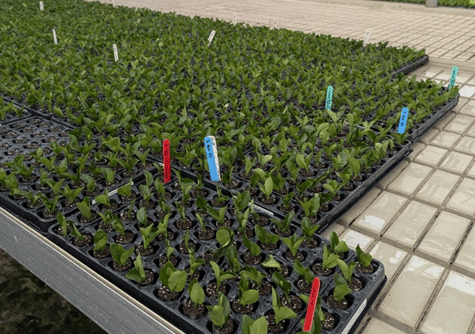
As discussed in this previous post, one of the most important things you can do to get on top of Parvispinus early is dipping cuttings. For the best dip choices, check out Ashely Summerfield’s blog post on the most research recent on “Clean Start” for Parvispinus.
The second most important thing is a drench of Kontos (spirotetramat) at the end of propagation to target Parvispinus larvae hatching out of thrips eggs that may not be reached by the dips. Kontos is one of our 4 all-star chemicals for Parvi (along with Pylon, Rimon, and M52), but seems to work best (and last longer) as a drench.
Unfortunately, Kontos is also one of our more expensive chemicals. At roughly $325/bottle, drenching will cost almost $0.04/sqft at the label rate. For an entire acre, this is going to cost you over $1600 (or about 5 bottles), which is cost prohibitive for most growers. However, the propagation area is a LOT less square footage. So drenching (or really, “sprenching”) here just makes sense.
Systemic Pesticides Early in the Crop
If you’ve already potted up your crop, but haven’t spaced it yet, there’s still time for a heavy spray, or “sprench” of Kontos on your mandevilla crop. This hits both the leaves and makes sure some gets into the pot as well. And, since Kontos is systemic both up and down, this will make sure the plant is covered. Although this is more expensive than a drench in propagation, it will still be cheaper than a drench or full foliar spray once the crop is spaced.
Below is a case study where we drenched Kontos in propagation, then again right before potting. Essentially, each Kontos drench gave us a minimum of 8 weeks of control, and it then took a while for thrips numbers to ramp back up from this new starting point, delaying the need for other chemicals.
If you want to save your 2nd allowable Kontos application per year for later in the crop cycle (i.e. Spring), other growers have found Intercept (imidacloprid) and Tristar (acetamiprid) to be effective systemics for Parvispinus (both in IRAC group 4) when applied for aphid pests. Note that you can check out what rate you’ll need for each chemical on Ontario’s Crop Protection Hub.
Case Study 1: Drenches to the Rescue – In 2025, a grower I was working with attempted mainly biocontrol in their mandevilla propagation. The cuttings came in heavily infested, so cutting dips, nematodes and weekly applications of microbial insecticides suppressed Parvispinus, but weren’t enough. The rooted liners were still showing moderate to heavy damage in some varieties in crop week 7. We decided to do a drench of Kontos and a spray of Rimon on the liners in week 8 of the crop. Given the severity of the damage, we also did another Kontos drench at week 16, just before they were potted up. After these chemical controls, the grower only saw Parvispinus pop up in week 24 of the crop, but at VERY low levels (literally ONE thrips) and there was no new damage. Besides some prophylactic applications of Lalguard M52 in the entire compartment, no other chemical interventions were needed until later in the crop, and then only in hot spots or susceptible varieties.
Choose Chemicals that Target More Than One Pest

The use of Kontos, Intercept or Tristar in late propagation or early production can help with other pests of mandevilla, meaning you get more bang for your buck.
Any of these chemicals may eliminate your need to deal with oleander aphids (Aphis nerii) or green peach aphid (Myzua persicae) going forward, especially if aphids come in on the cuttings.
These chemicals may also offer some protection from aphids flying in later in the crop. Although both species are established in Ontario, and can overwinter here, they are unlikely to fly in when daily temperatures are below 13 C.
Based on some of the resistance we saw in two-spotted spider mite populations (Tetranychus urticae) in 2026, Kontos may or may not help with this pest. Refer to my previous post on battling resistant spider mite in this crop, and how to incorporate predatory mites.
Unfortunately, the use of neonicitinoid insecticides can inadvertently ramp up spider mite populations, so your chemical of choice at this stage should be based on which pests you’re seeing now and which your greenhouse has typically battled in the past.
Make Use of Cultural Controls
Handling Susceptible Varieties:
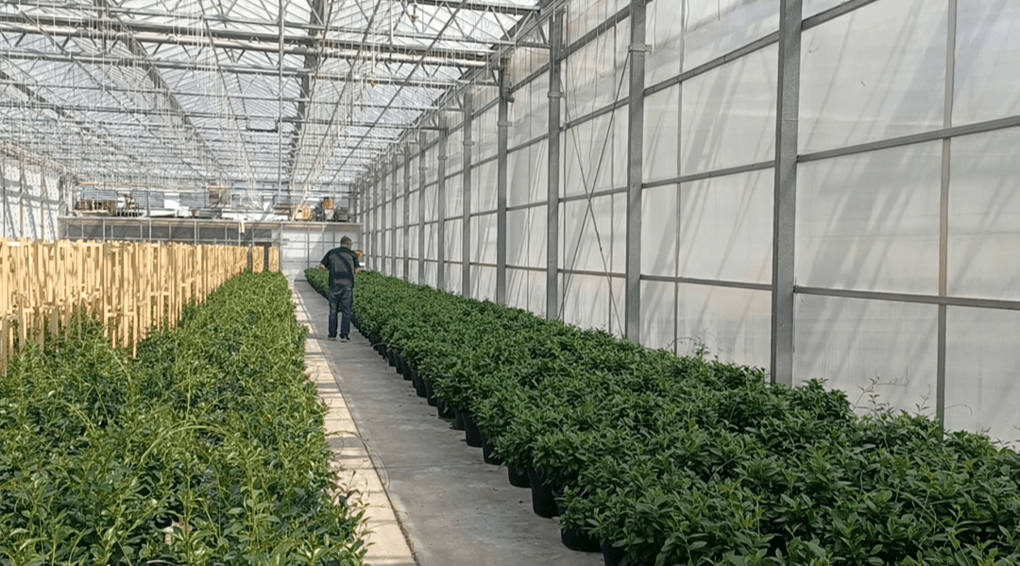
We’ve now seem some patterns over several years of Parvi infestations in Mandevilla. The Summerstar series, particularly Summerstar White, seems more attractive to this pest. Research from Vineland recently confirmed that Parvi females lay eggs on old and young leaves of this variety, as opposed to young leaves only in reds, meaning the pest load will be higher.
The best answer here would honestly be to choose a different white variety that is less attractive to Thrips parvispinus, and would likely lower your overall pesticide costs in your mandevilla crop. But, if you just can’t bring yourself to get rid of your favourite susceptible variety, then at least plan a way to optimize spray coverage. Case study 2 talks about different ways growers have handled this issue in recent years.
Case Study 2: What to Do with Your “Problem Children”. Two growers had noticed Summerstar White (SSW) carried a higher load of Thrips parvispinus compared to their other varieties, meaning often the whole compartment got sprayed with insecticides, when only 1 variety was driving the issue. Grower 1 decided to move this variety into an entirely separate compartment. This allowed SSW to be on a more intensive spray program. Without the presence of SSW, the other varieties went from a weekly spray rotation, to only 1 chemical application every 6 weeks, saving the grower money. Grower 2 had the same issue, but could not separate out SSW due to logistical issues. Their solution was to use a high amount of blue mass trapping cards in this variety, to prevent Parvi females from spreading to other varieties. When spacing, they also made sure all sizes of SSW were never adjacent to a compartment wall. This allowed the grower to spot spray SSW from both sides, ensuring good coverage, and often eliminating the need to spray other varieties.
Clean up Your Weeds:
Cultural controls are all about making the environment less hospitable for the pest. This means removing preferred varieties, but also secondary hosts that don’t receive proper pest management tactics, and can act as a source of Parvi. I’m talking about WEEDS, people.
Recent observations from Ashley Summerfield at Vineland Research and Sarah Stuive at Global Horticultural have confirmed that several weed species found in and around greenhouses can serve as hosts to Thrips parvispinus. These include hairy bittercress (Cardamine hirsuta), a member of the mustard family, and horseweed (Conyza canadensis), in the Asteraceae family. Both have small, tiny flowers with lots of pollen that Parvi seems to be in to (similar to Parvi’s documented love of lobularia).
To make sure you aren’t re-infesting your own crops after pesticide applications, wasting your efforts, make sure to hand weed pots, landscape cloth, and under benches as much as possible while your mandevilla is growing. Additionally, make sure to clean out your greenhouse properly after the mandevilla crop so the Parvi don’t stick around on these uninvited plants.


Take Home Messages
To save money on your Parvi management program, the name of the game is early intervention with systemic pesticides, and make sure you get good spray coverage on problem varieties.
- Drench pesticides early, to get on top of Parvi, then wait as long as possible for Fall “clean up”. Two periods of back-to-back sprays is cheaper than a weekly spray rotation from August to December.
- Spot spray susceptible varieties if needed, but don’t do the whole compartment just “because”. Parvi tend to be very variety specific, so spraying your entire greenhouse each time can be costly and unneccessary.
- Make your pesticide choices based on ALL pests present in mandevilla when you can. One pesticide for 2 pests is cheaper than picking several, especially when it comes to labour, as tank mixes aren’t allowed by Health Canada.
- Make your greenhouse less hospitable to Parvi, whether that’s in the form of changing varieties and/or removing weeds. This can cut down on your pesticide use, as it reduces your thrips load.


Comments
Post a Comment